

Phakic IOL Surgery
Phakic Intraocular Lens Surgery — The Complete Guide by SightMD
Phakic intraocular lens (IOL) surgery is an advanced vision correction option designed for patients with high levels of nearsightedness who are not candidates for laser vision correction. Unlike LASIK or PRK, phakic IOL surgery corrects vision by adding a specialized lens inside the eye rather than reshaping the cornea.
At SightMD, our surgeons offer phakic IOL procedures as a safe, effective alternative for patients seeking excellent distance vision while preserving the eye’s natural focusing ability.
What is Phakic IOL Surgery?
Phakic IOL surgery involves implanting a specialized intraocular lens inside the eye while keeping the patient’s natural lens intact. Depending on the type of implant used, the lens is positioned either in front of or behind the iris, or it may be securely attached to the iris itself.
This procedure is most commonly recommended for patients with severe myopia (nearsightedness) who are not good candidates for LASIK due to thin corneas or high prescriptions. Unlike refractive lens exchange (RLE), which removes the natural lens, the natural lens remains in place during phakic IOL surgery — preserving the eye’s ability to focus up close and can be reversed if needed.

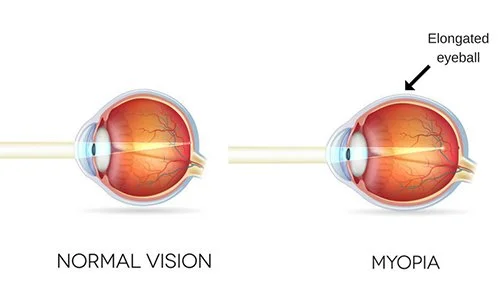
What is Myopia?
The cornea is the clear front part of the eye that bends light. The lens, behind the iris, helps to adjust this bending for clearer vision. Together, the cornea and lens work to focus incoming light onto the retina, enabling clear vision. In a myopic eye, the cornea is curved excessively, causing it to bend light too much. The light bends as it goes through the lens, causing it to focus in front of the retina.
This means that the light-sensitive cells in the retina do not receive a complete image. They send partial information to the brain through the optic nerve, which tries to understand this incomplete data and give it meaning.
Consequently, individuals with myopia experience blurry vision for distant objects, while close-up objects appear clear. This is because nearby objects require more light refraction than those that are far away. Phakic IOL surgery corrects this imbalance by redirecting light so it reaches the retina properly, restoring clear distance vision.
Am I A Candidate for Phakic IOL Surgery?
You may be a good candidate for phakic IOL surgery if you have high nearsightedness and are seeking an alternative to glasses, contact lenses, or laser vision correction. Phakic IOLs are typically recommended for younger patients who do not yet have age-related vision changes.
Ideal candidates generally:
- Are under age 45
- Have moderate to severe myopia
- Have thin or irregular corneas
- Have stable vision prescriptions
- Do not have significant eye disease or retinal conditions
- Have no history of retinal detachment
A comprehensive consultation at SightMD allows our surgeons to evaluate your eye health and determine whether phakic IOL surgery is the safest and most effective option for your vision needs.


What Are the Benefits of Phakic IOL Implantation?
Phakic IOL surgery offers a range of benefits for patients with high myopia who are not candidates for laser vision correction. By adding a lens rather than reshaping the cornea, this procedure delivers powerful correction while preserving the eye’s natural structure.
Benefits include:
- Clear, sharp distance vision without reliance on glasses or contacts
- A removable lens option for added flexibility
- Reduced risk of dry eye compared to corneal laser procedures
- Preservation of natural near focusing ability in patients under 40
- Minimal glare, halos, or low-light visual disturbances
What Are the Different Types of Phakic Intraocular Lenses (IOLs)?
Phakic intraocular lenses are designed for patients with significant nearsightedness who wish to correct their vision without removing the natural lens. These lenses provide long-term vision correction while maintaining the eye’s natural focusing function.
Two FDA-approved phakic IOL options may be recommended based on your anatomy and visual needs:
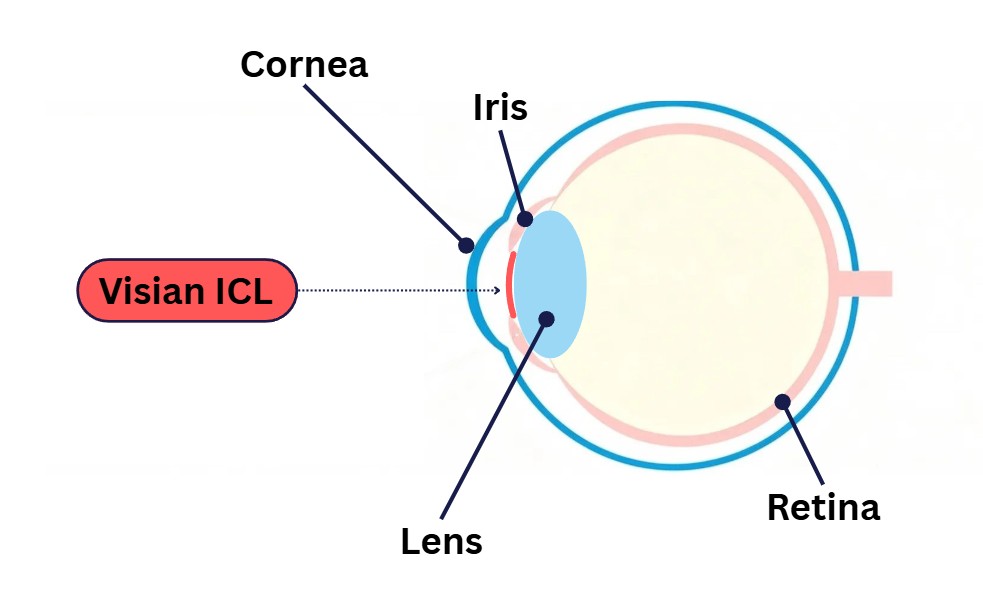
Visian ICL
Visian ICL (Implantable Collamer Lens) is made from a safe, biocompatible material called Collamer®.
Designed to fit naturally within the eye, these lenses provide long-term comfort while reducing the likelihood of the patient experiencing dry eyes after the procedure. During surgery, the lens is placed behind the colored part of the eye—above the natural lens—allowing for sharp, high-quality vision without removing any corneal tissue.
Visian ICLs can also correct astigmatism for enhanced visual clarity.
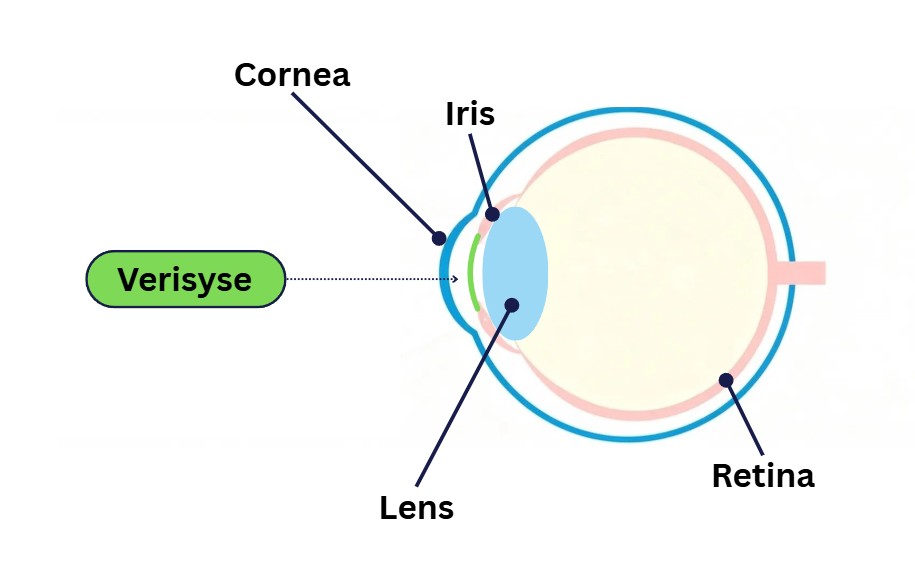
Verisyse
Made from a durable, medical-grade polymer, Verisyse is an “anterior chamber” lens that is placed in front of the iris, rather than behind it, and is designed for stability and precise positioning during implantation.
Unlike corneal-based procedures, Verisyse corrects vision by altering how light enters the eye without reshaping or removing corneal tissue.
Although it is used less frequently today, Verisyse may be recommended in select cases based on a patient’s unique eye anatomy, prescription strength, or other clinical considerations.
The Phakic IOL Surgery Experience at SightMD
Led by our team of board-certified ophthalmologists, SightMD provides a carefully guided surgical experience, combining advanced diagnostics, precise surgical techniques, and personalized care to ensure optimal outcomes for phakic IOL patients.

What to Expect Before Phakic IOL Surgery
Before surgery, you will attend a comprehensive evaluation where your eye health, prescription, and visual goals are carefully assessed. Advanced imaging and precise measurements allow your surgeon to evaluate the anatomy of your eye and determine which phakic intraocular lens is best suited for your vision needs and lifestyle.
During this visit, we’ll also review your medical history, confirm candidacy, and answer any questions you may have about the procedure or recovery. You’ll receive detailed pre-operative instructions, including guidance on medications, eye drops, and temporary activity restrictions. Our team will walk you through every step of the process so you feel informed, confident, and fully prepared ahead of your upcoming surgery day.
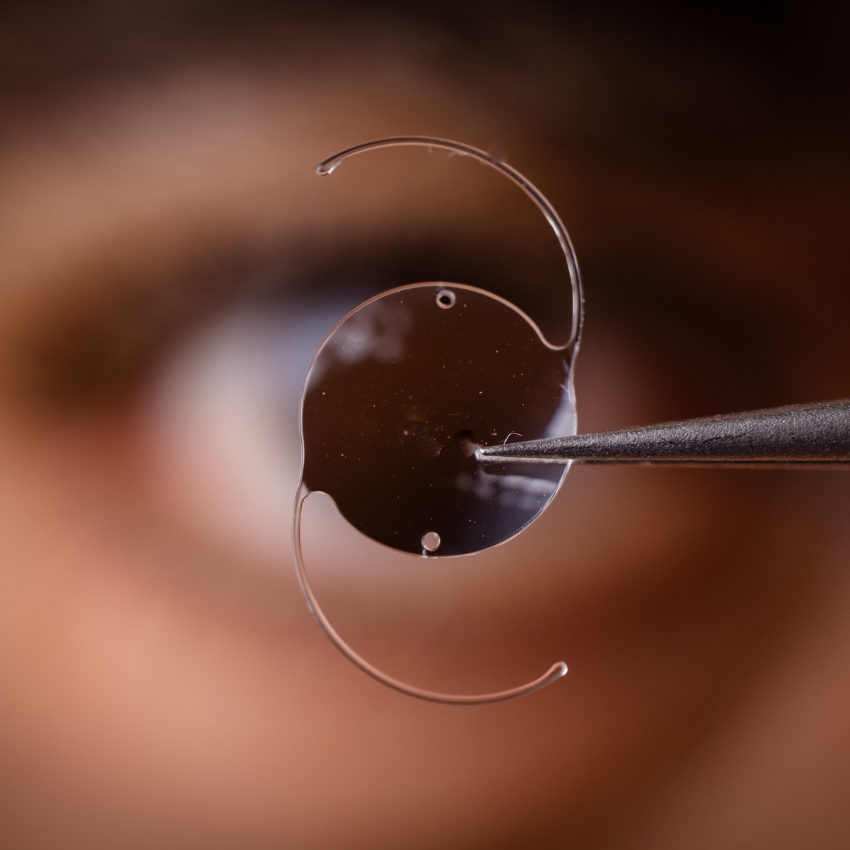
What to Expect During Phakic IOL Surgery
Phakic IOL surgery is an outpatient procedure that typically takes 15–30 minutes. Numbing eye drops are used to ensure comfort, and additional drops may be administered to prepare the eye for lens placement. Most patients experience minimal discomfort during the procedure.
Depending on the type of lens, the implantation technique differs slightly.
With a Verisyse IOL, the lens is placed in front of the iris—centered in front of the pupil—and gently secured to the iris for stability. In some cases, small laser openings may be created to support healthy fluid circulation within the eye.
With a Visian ICL, the lens is carefully inserted behind the iris and positioned in front of the natural lens, remaining completely invisible once in place.

What to Expect After Phakic IOL Surgery
The day following your phakic IOL surgery, you will return for a follow-up visit to ensure that you are healing properly. Vision improvement often begins quickly after your procedure, though some patients may experience temporary blurriness as the eye adjusts. Each individual’s healing process may be slightly different.
You’ll be prescribed eye drops to support healing and reduce inflammation. Most patients return to normal activities within a week, though heavy lifting and swimming should be avoided for several weeks.
Visual clarity continues to improve over the following days and weeks and many patients achieve 20/20 vision or better — a significant improvement not only in vision, but in their overall quality of life.
Phakic IOL vs. LASIK
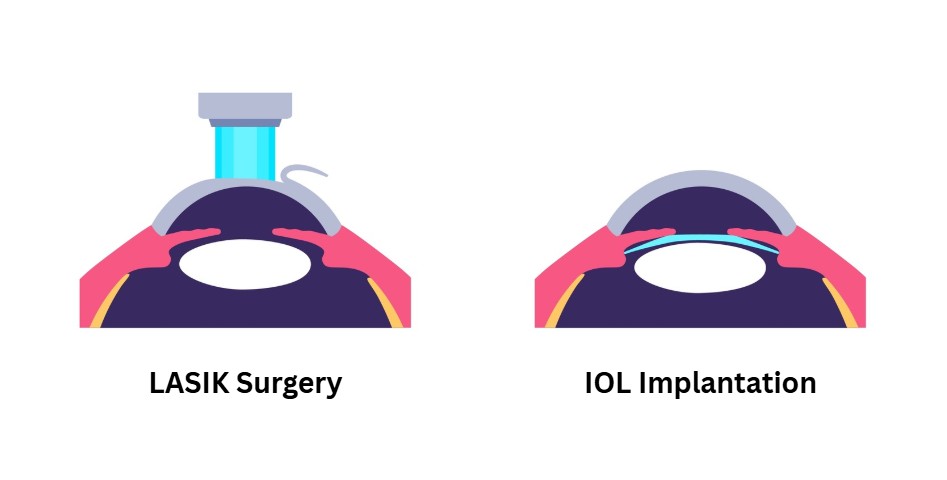
Both LASIK and phakic IOL surgery aim to improve how light is focused within the eye. However, in practice, these procedures take a different approach in achieving this objective.
LASIK corrects refractive errors by vaporizing small sections of corneal tissue to reshape and flatten the curvature of the cornea. This new curvature allows light to bend in a way that provides clear vision at all distances.
Phakic IOL surgery, on the other hand, corrects vision by implanting a lens inside the eye, leaving the cornea untouched. The implanted lens modifies incoming light rays, enhancing how light is refracted by the cornea and lens. This results in improved distance vision. At the same time, the eye’s natural lens remains intact and continues to adjust for near vision through a process known as accommodation.
Phakic IOL Surgery FAQs:
Phakic IOL surgery is typically considered an elective vision correction procedure and is not covered by most insurance plans. However, patients may be able to utilize their pre-tax savings accounts, such as a Flexible Spending Account (FSA) or Health Savings Account (HSA), to help offset the cost. SightMD also offers flexible financing options, and our team will review payment solutions with you during your consultation.
Phakic IOL surgery is generally very comfortable. Numbing eye drops are used, and most patients feel only mild pressure or awareness during the procedure.
The procedure typically takes 15–30 minutes and is performed on an outpatient basis, allowing you to return home the same day.
Many patients notice clearer vision within a day or two, with continued improvement as the eyes heal and adjust over the following weeks.
No. Phakic IOLs are completely invisible once implanted and cannot be seen by you or others.
Yes. One advantage of phakic IOLs is that they are removable if needed, providing flexibility for future vision changes.
Phakic IOL surgery is often recommended for patients with moderate to severe nearsightedness who are not ideal candidates for LASIK due to thin corneas or high prescriptions.
Yes. EVO ICL is FDA-approved with a strong safety profile.