

LASEK Surgery
LASEK Surgery — The Complete Guide by SightMD
At SightMD, we are committed to providing cutting-edge vision correction solutions, including LASEK (Laser-Assisted Sub-Epithelial Keratectomy). LASEK is a proven laser eye surgery designed to correct common refractive errors such as nearsightedness, farsightedness, and astigmatism. For patients who may not be ideal candidates for LASIK, LASEK provides a safe, effective alternative to glasses or contact lenses.
Our experienced surgeons take a personalized approach to care, combining advanced technology with clinical expertise to help each patient achieve their best possible vision. From your initial consultation through recovery, SightMD prioritizes comfort, safety, and long-term visual success. If you’re exploring laser vision correction and want to understand whether LASEK is right for you, our team is here to guide you every step of the way.
What is LASEK Eye Surgery?
LASEK combines key elements of both LASIK and PRK to correct refractive errors while preserving more of the cornea’s natural structure. During the procedure, the surgeon gently loosens and lifts the thin outer layer of the cornea—called the epithelium—to access the underlying corneal tissue. A specialized excimer laser is then used to precisely reshape the cornea and improve how light focuses on the retina.
After the laser treatment is complete, the epithelial layer is repositioned and protected with a soft bandage contact lens to support healing. Because LASEK does not require the creation of a deeper corneal flap, it is often recommended for patients with thinner corneas or certain corneal characteristics.

Am I a Candidate for LASEK Surgery?
You may be a good candidate for LASEK if you:
- Have thin corneas that make LASIK less suitable
- Have mild to moderate myopia, hyperopia, or astigmatism
- Have a stable vision prescription
- Are in good overall eye health, without conditions such as keratoconus
- Want a laser vision correction option that preserves corneal tissue
A comprehensive eye exam at SightMD is the best way to determine candidacy. Our surgeons evaluate your eye health, vision goals, and corneal structure to recommend the most appropriate procedure for your needs.
Benefits of LASEK Eye Surgery
LASEK offers several advantages for patients who are not ideal LASIK candidates while still delivering excellent visual outcomes.
Key benefits of LASEK include:
- Improved Vision: Many patients experience significant improvement in clarity and reduced dependence on glasses or contact lenses
- Corneal Preservation: LASEK maintains more of the cornea’s natural structure compared to LASIK
- Long-Lasting Results: Vision correction achieved with LASEK is stable and lasting for most patients
- Excellent Option for Thin Corneas: Ideal for patients who cannot safely undergo flap-based procedures

The LASEK Surgery Experience at SightMD
Understanding what to expect before, during, and after surgery helps patients feel confident and prepared. Our team is committed to guiding you through each phase of the LASEK process with clear communication and attentive care.

What to Expect Before LASEK Surgery
Before surgery, you’ll attend a comprehensive consultation where your vision, eye health, and corneal thickness are carefully evaluated. Advanced diagnostic testing allows your surgeon to confirm candidacy and create a customized treatment plan tailored to your eyes.
You may be instructed to stop wearing contact lenses prior to surgery to allow your cornea to return to its natural shape. Your surgeon will also review pre-operative instructions, including guidance on medications, eye drops, and activity restrictions to help ensure a smooth procedure and recovery.
What to Expect During LASEK Surgery
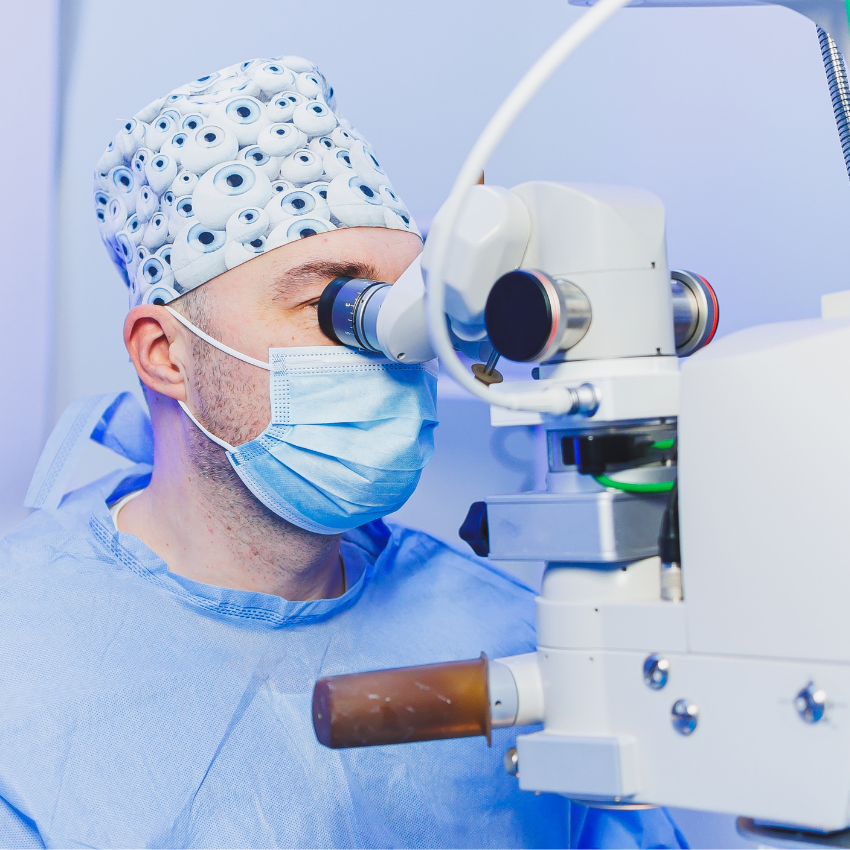
LASEK is an outpatient procedure performed at SightMD’s state-of-the-art surgical centers and typically takes less than 30 minutes for both eyes. Numbing eye drops are used to ensure comfort throughout the procedure.
A diluted alcohol solution is applied to gently loosen the epithelial layer, which is then lifted to expose the corneal surface. The excimer laser reshapes the cornea based on your personalized treatment plan—a process that takes only seconds per eye. Once complete, the epithelium is repositioned, and a soft bandage contact lens is placed to protect the eye during healing.

What to Expect After LASEK Surgery
Recovery after LASEK surgery is slightly longer than traditional LASIK, as the epithelial layer needs time to heal. Mild discomfort, light sensitivity, and blurry vision are commonly experienced in the first few days after the procedure and are managed with prescribed medications and eye drops.
A protective contact lens is typically worn for several days and removed by your eye surgeon once healing is underway. Vision improves gradually during the first week, with continued sharpening over the following weeks. Most patients achieve their final visual results within a few months.
LASEK vs. PRK
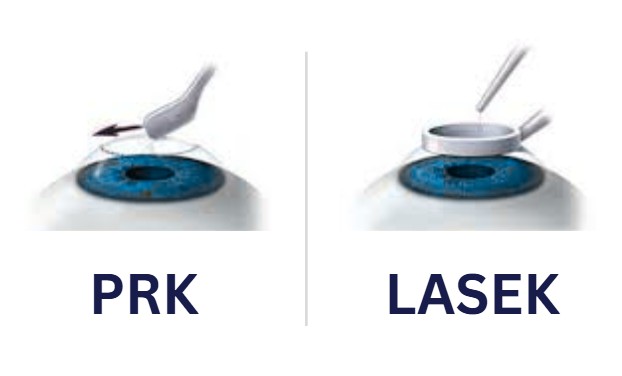
Both LASEK (Laser Epithelial Keratomileusis) and PRK (Photorefractive Keratectomy) are surface-based laser vision correction procedures designed to treat refractive errors, like nearsightedness, farsightedness, and astigmatism. The primary difference lies in how the corneal epithelium is handled.
In PRK, the epithelium is completely removed and allowed to regenerate naturally. In LASEK, the epithelial layer is preserved by lifting and repositioning it after laser treatment. This distinction may influence comfort and healing, depending on the patient’s individual eye anatomy.
LASEK vs. LASIK
LASIK and LASEK both aim to improve vision by reshaping the cornea, but they employ different surgical techniques. LASIK (Laser-Assisted In Situ Keratomileusis) involves creating a deeper corneal flap, allowing the laser to reshape the inner layers of the cornea.
LASEK reshapes the cornea closer to the surface without creating a flap, making it a preferred option for patients with thinner corneas or those at higher risk for flap-related complications. While recovery takes slightly longer than LASIK, visual outcomes are often comparable.

LASEK Surgery FAQs:
The procedure typically takes less than 30 minutes for both eyes.
The procedure itself is painless due to numbing drops. Mild discomfort during recovery is common but manageable.
Initial healing occurs over several days, with vision continuing to improve over weeks to months.
Most patients return to work within one week, depending on healing and visual demands.
Yes, LASEK provides long-lasting vision correction, though natural age-related changes can still occur.
Yes, LASEK effectively treats astigmatism along with nearsightedness and farsightedness.
For patients with thin corneas or specific corneal concerns, LASEK may offer a safer alternative.
LASEK is typically considered an elective vision correction procedure and is not covered by most insurance plans. However, patients may be able to use pre-tax savings accounts such as an FSA or HSA to help offset the cost. Financing options may also be available—our team can review payment options during your consultation.