

Contact Lens Exams
Contact Lenses & Contact Lens Exams at SightMD
Contact lenses offer clear, natural vision without the frames—making them a popular choice for patients with active lifestyles or specific visual needs. At SightMD, contact lens exams go beyond a standard eye exam to ensure your lenses fit comfortably, support long-term eye health, and deliver optimal vision.
Our doctors take the time to evaluate your prescription, eye surface, tear film, and lifestyle needs to recommend contact lenses that work best for you—whether you’re new to contacts or exploring more advanced options.
Am I A Candidate for Contact Lenses?
Contact lenses are a great solution for many people, and bring a sense of freedom that glasses can’t provide. Contacts may be a good solution if you:
- Have trouble seeing things at distance and need vision correction all the time
- Have an active lifestyle that make wearing glasses difficult
- Are committed to the proper storage and handling of contacts
- Are not a candidate or don’t want LASIK
A comprehensive eye exam will help assess your specific situation and your doctor will find the best solution for your lifestyle. Certain conditions like chronic eye infections or dry eye may mean contacts are not right for you. If that’s the case, your doctor will work with you to help find an alternative that fits your needs.

What to Expect at Your Contact Lens Fitting
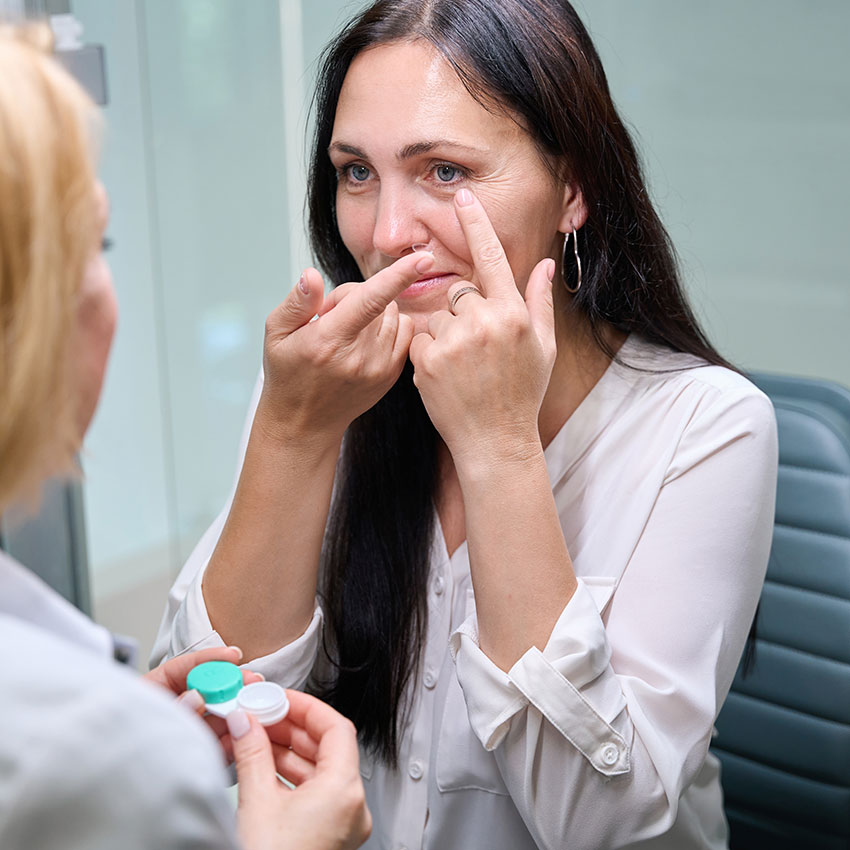
Contact lens exams are different from your annual eye exam. In addition to assessing your prescription, your doctor will check to make sure contacts are sitting properly and your eyes are generally healthy. If you’re a first-time contact wearer, your doctor will show you how to safely insert and remove your lenses and walk you through the steps for proper care and cleaning.
If you currently wear contact lenses, you should bring your prescription and lens boxes so we can keep the contact lens exam as efficient as possible. Your doctor will want to evaluate your vision and see how your current lenses fit so they can make recommendations for any adjustments.
Soft vs. Hard Contact Lenses: What’s the Difference?
If you’re considering contact lenses as an alternative to glasses, you may be wondering whether soft or hard lenses are right for you. Perhaps you lead an active lifestyle, participate in sports, or simply want more freedom from frames. Both soft and hard contact lenses offer distinct advantages, and the best option depends on your vision needs, eye health, and daily routine.

Soft Contact Lenses
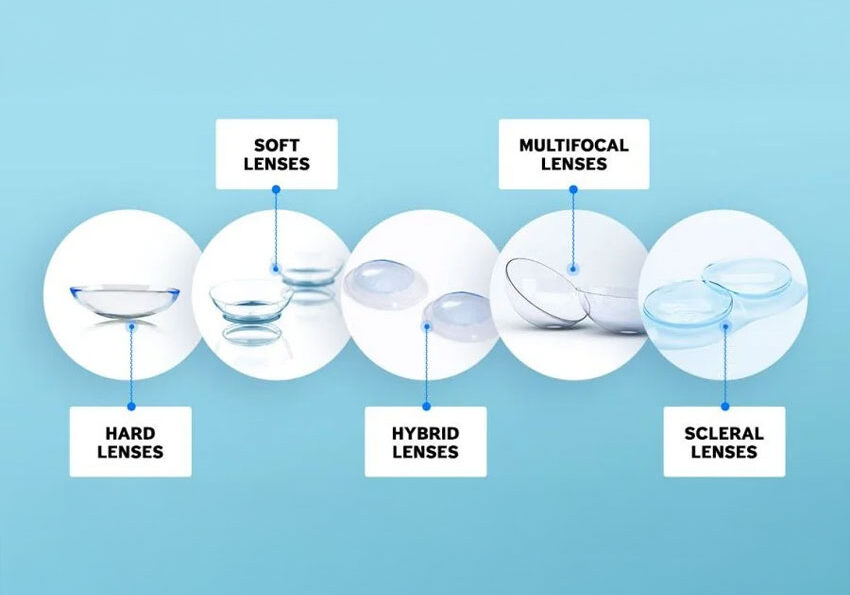
Soft contact lenses are the most commonly worn type of contacts and are made from flexible materials such as silicone hydrogel, allowing oxygen to reach the eye while providing a comfortable fit. These lenses typically require a multipurpose cleaning solution and are available in several convenient wear schedules, including:
- Daily disposable lenses, worn once and discarded at the end of the day
- Planned replacement lenses, worn daily and replaced every two weeks or monthly
- Extended-wear lenses, designed for continuous wear for several days at a time
Benefits of Soft Contact Lenses:
- Available in daily, weekly, or monthly replacement options
- Comfortable and easy to adapt to
- Stay in place well during movement and activity
- Correct nearsightedness, farsightedness, and astigmatism
- Well suited for active lifestyles and first-time contact lens wearers
Hard Contacts & Specialty Lenses
When standard soft lenses aren’t sufficient, hard and specialty contact lenses can provide advanced vision correction. These lenses are often recommended for patients with conditions such as keratoconus, irregular corneas, or high astigmatism.
- Conventional hard lenses (PMMA): Maintain their shape on the eye and can deliver sharper vision for certain corneal disorders
- Rigid gas permeable (RGP) lenses: Similar to PMMA lenses, but allow oxygen to pass through for improved comfort and eye health
- Scleral lenses: Larger lenses that vault over the cornea and rest on the sclera, helping improve vision while keeping the eyes hydrated
Benefits of Hard & Specialty Lenses:
- Provide exceptionally crisp and stable vision
- Durable and long-lasting
- Retain their shape for consistent optical performance
- Available in multifocal and bifocal designs
- Ideal for complex prescriptions and irregular corneas
Contact Lenses for Eye Conditions
Contact lenses can do far more than simply replace glasses. Today’s advanced lens designs allow eye doctors to tailor vision correction based on your prescription, eye anatomy, and specific visual challenges. At SightMD, our specialists carefully match each patient with the lens type best suited to their condition—helping deliver clearer vision, greater comfort, and long-term eye health.
Single-Vision Contact Lenses for Near & Farsightedness
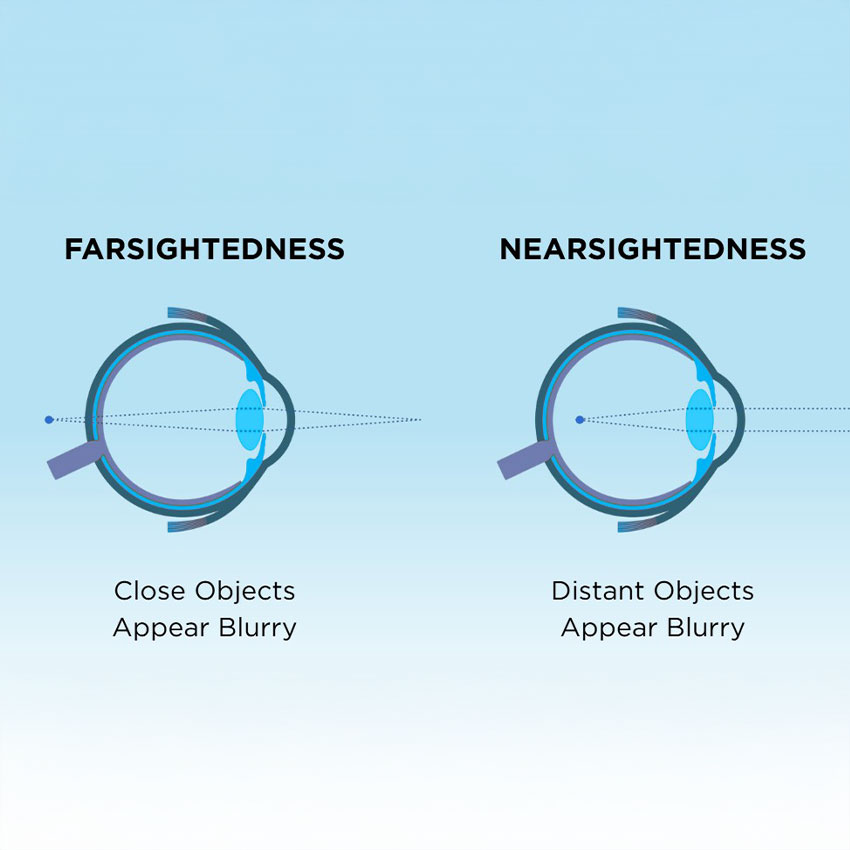
Single-vision contact lenses correct vision at one focal distance and are commonly prescribed for myopia (nearsightedness) or hyperopia (farsightedness). These lenses provide crisp, reliable vision for everyday activities and are available in soft, rigid gas-permeable, and daily disposable options. Single-vision lenses are often the first choice for children, teens, and adults with uncomplicated prescriptions.
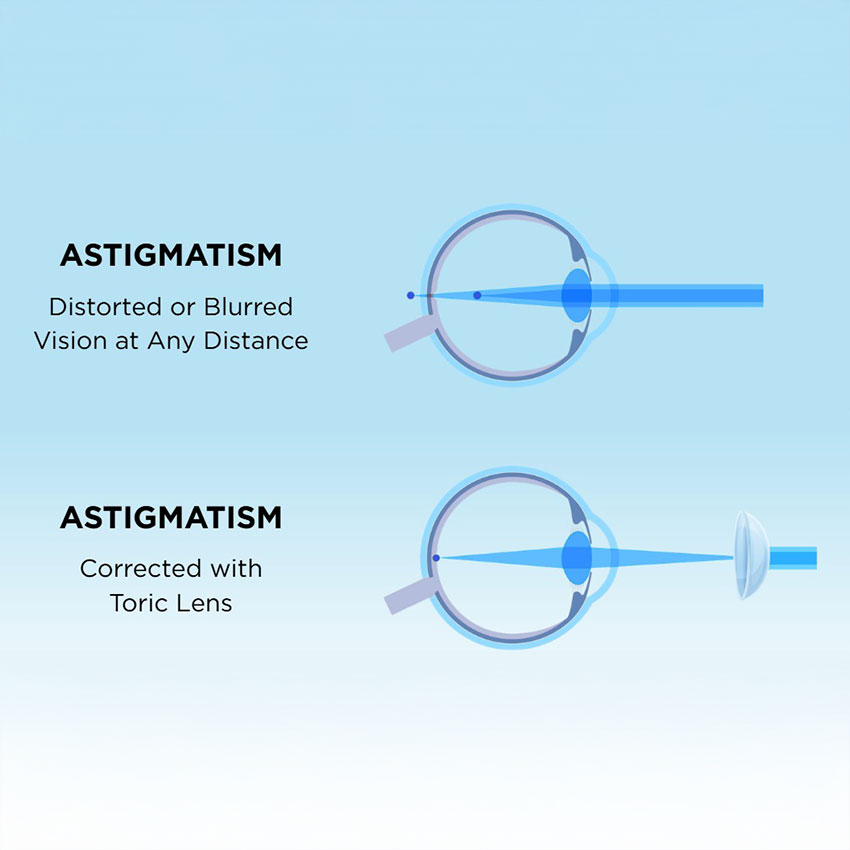
Toric Contact Lenses for Astigmatism
Astigmatism occurs when an individual’s cornea or lens has an irregular shape, causing blurred or distorted vision. Toric contact lenses are specially designed to maintain a stable orientation on the eye, allowing them to correct astigmatism along with nearsightedness or farsightedness. These lenses are available in both soft and rigid designs and can be customized to each patient’s unique prescription.
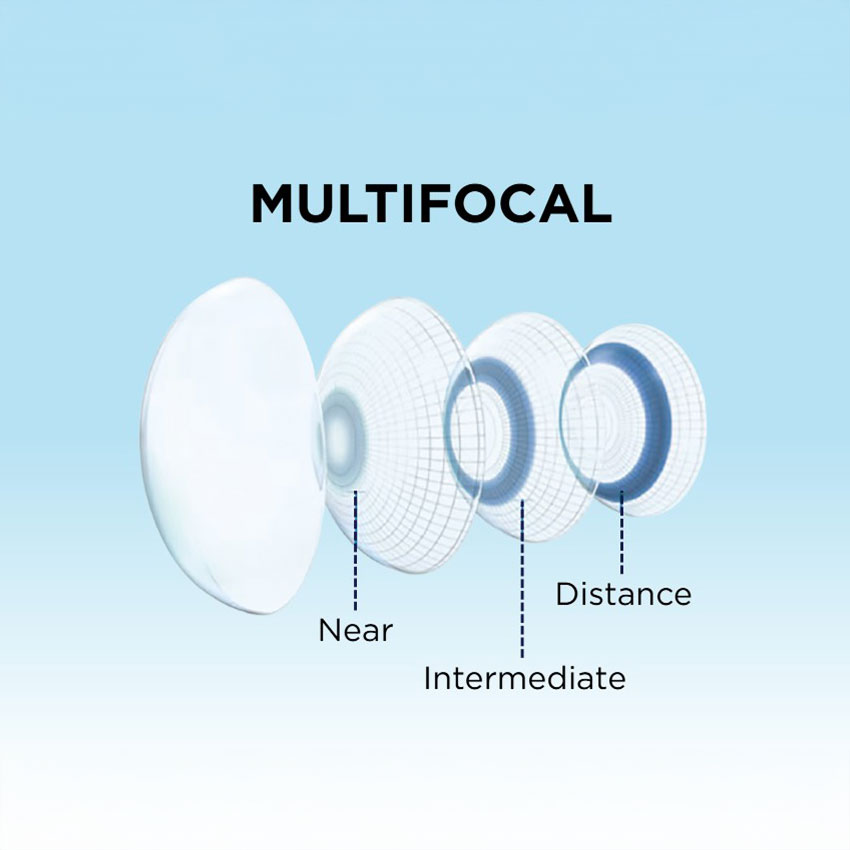
Multifocal Contact Lenses for Presbyopia
Multifocal contact lenses are designed for patients with presbyopia, an age-related eye condition that affects near vision, typically beginning in the 40s. These lenses contain multiple focusing zones that allow the eyes to see clearly at near, intermediate, and distance ranges. Multifocal contacts are a proven lens type for reducing an individual’s dependence on reading glasses while maintaining natural binocular vision.
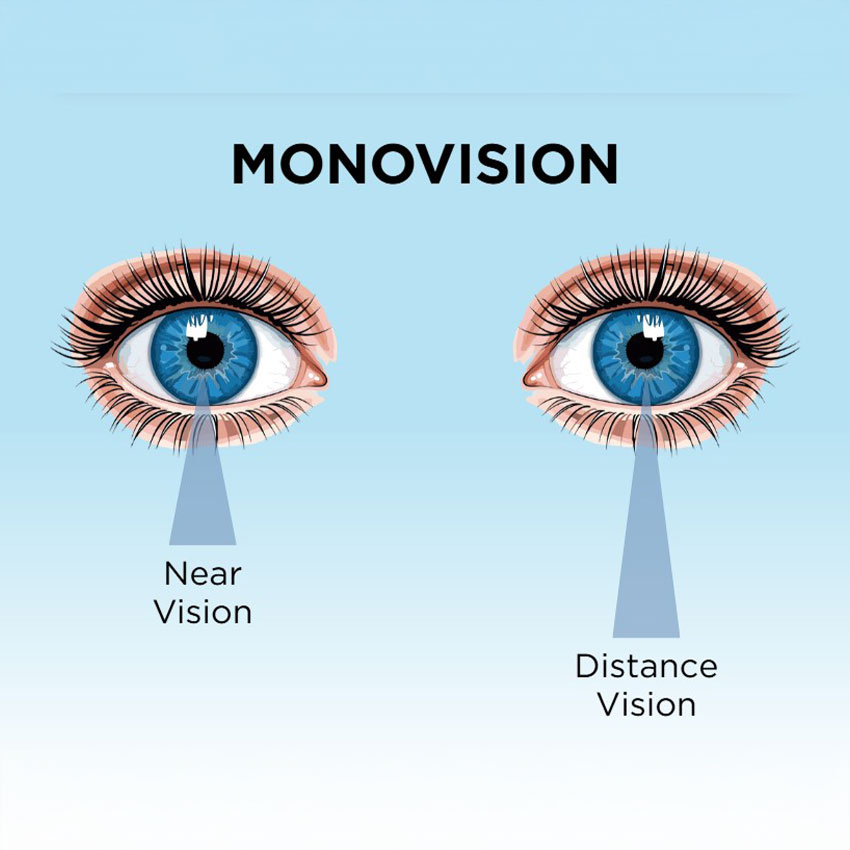
Monovision Contact Lenses for Presbyopia
Monovision contact lenses address presbyopia by correcting one eye for distance vision and the other for near vision. Over time, the brain adapts to use each eye as needed. Monovision can be an effective option for some patients, though it may slightly affect depth perception. During your contact lens exam at SightMD, your doctor will help you determine if this is the most effective choice for your vision needs.

Scleral Contact Lenses for Irregular Corneas
Scleral contact lenses are large-diameter, gas-permeable lenses that vault over the cornea and rest on the sclera (the white part of the eye). They are especially effective for patients with irregular corneas, including those with keratoconus, corneal scarring, or post-surgical irregularities. Scleral lenses help correct distorted vision when glasses or traditional contact lenses are no longer effective.
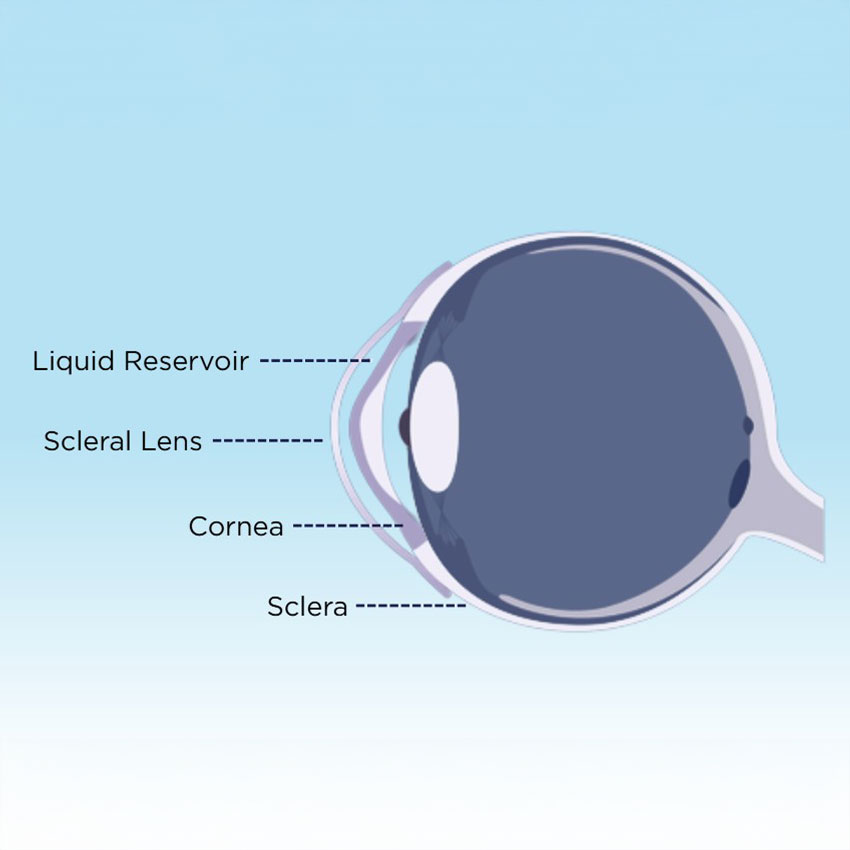
Scleral Contact Lenses for Dry Eye
Scleral lenses are also used as a therapeutic option for patients with severe dry eye or ocular surface disease. These lenses hold a reservoir of fluid between the lens and the cornea, continuously bathing the eye in moisture throughout the day. This protective environment can significantly reduce discomfort, improve visual stability, and support healing for patients who struggle with chronic dryness or irritation.
Why Choose SightMD for Contact Lens Exams
At SightMD, contact lens exams go beyond simply checking your prescription. Our eye care team takes a personalized approach to ensure your lenses fit comfortably, support long-term eye health, and align with your lifestyle.
With access to best-in-class diagnostic technology, specialty lens expertise, and coordinated care between optometrists and ophthalmologists, SightMD is equipped to manage everything from routine fittings to complex visual needs—all in one trusted network.
Contact Lens FAQs:
Yes, a contact lens exam is different from a regular eye exam. While a comprehensive eye exam evaluates your overall vision and eye health, a contact lens exam includes additional measurements and testing to determine the best contact lenses for your eyes and lifestyle. Your eye doctor will assess the shape of your cornea, evaluate tear film quality, and ensure your contact lenses fit comfortably and provide clear vision.
Contact lens prescriptions must be updated regularly—typically every 12 months. Annual exams ensure your lenses still fit properly, your prescription remains accurate, and your eyes stay healthy while wearing contacts.
Proper contact lens care is essential for maintaining healthy eyes and clear vision. Most lenses require daily cleaning and disinfecting with the recommended solution, along with regular replacement of lens cases. Daily disposable lenses eliminate the need for cleaning, while specialty lenses may require specific care instructions. Your SightMD provider will review proper hygiene, handling, and cleaning techniques to help prevent irritation and infection.
Contact lenses and glasses each have unique benefits. Contact lenses provide a wider field of vision, won’t fog or slide, and are often preferred for sports or active lifestyles. Glasses, on the other hand, require less daily maintenance and may be more convenient for some patients. Your eye doctor can help you decide which option—or combination—best fits your needs.
Coverage varies by plan. Many vision insurance plans cover contact lens exams, while medical insurance may apply if there is an underlying eye condition. Pre-tax savings accounts such as FSA or HSA may also be used. Our staff is happy to help review your benefits before your visit.
Yes. Many children and teens are good candidates for contact lenses, especially for sports or school activities. Readiness depends on eye health, maturity, and the ability to follow proper care instructions.
Discomfort is often related to fit, dryness, or lens material. Your doctor can adjust your prescription or recommend a different lens type to improve comfort.
Yes. Specialized lenses such as toric, multifocal, or monovision contacts can correct astigmatism and age-related near vision changes.